Pressing, transition and low block: a guide to watching tactics
· 6 min read
When you hear tactical conversations, you come across terms such as "high press," "low block" and "transition defence," and most of the time you don't fully grasp what they mean or how they look on the pitch. Yet tactics is not a secret reserved for experts; it is a pattern of behaviour that anyone who knows how to watch can see on the pitch. In this article we explain the three most basic concepts (press, block and transition) with concrete signs. We will talk about universal concepts that will be useful in every match, not about current trends or particular teams.
Block height: where does defending begin?
A block is the collective shape a team takes on the pitch when defending. It has three basic heights:
High block
The team tries to win the ball in the opponent's half. The defensive line stays close to the halfway line, and the attacking players put pressure on the opposing goalkeeper and centre-backs. Signs: the goalkeeper is constantly under pressure in his own box, the opposing centre-backs struggle with back passes, the team pushes forward as a unit.
Advantage: when the ball is won, you are close to goal. Risk: if the press is broken, there is a big space left behind.
Mid block
The team waits in an orderly fashion around the halfway line and allows the opponent to carry the ball, but presses when the opponent enters certain zones. Signs: two lines (midfield and defence) are close to each other, the space between them is narrow, and certain passing lanes are closed.
Advantage: it is balanced and manages fatigue. Risk: it struggles if the opponent gets between the lines.
Low block
The team waits compactly close to its own penalty area. Signs: all ten outfield players are behind the ball, the wingers too have dropped back, and crosses and shots from outside are allowed.
Advantage: it closes the centre and gives up few clear chances. Risk: set pieces, second balls and mistakes under prolonged pressure. A team playing against a low block produces many corners and shots from crosses; in such matches, pay attention to how corner and card categories are affected.
Press triggers: when do they go?
Pressing does not mean running constantly. A well-organized press starts with specific triggers. When you watch these, you read the team's intention:
- Back pass: When the opponent passes the ball back to the goalkeeper, the attacking players rush out.
- Pushing to the touchline: The opponent is pushed to the side and squeezed into a corner.
- Weak foot: Pressure increases when a player uses his weaker foot slowly.
- Poor control: A player whose first touch is heavy is rushed.
When a press is triggered, the rest of the team also shifts forward. If only one player goes and the others stay in place, the press is not coordinated and the opponent finds the gap. Most of these seconds disappear in highlights; so watching live, or watching the match again carefully, is more instructive.
Transition: there is a moment, and then there isn't
The most dangerous moments in football are when the ball changes possession. This happens in two directions:
Transition to attack
When a team wins the ball and the opponent is still disorganized, a fast counter is very valuable. This window lasts a few seconds. Signs: a vertical pass immediately after winning the ball, wingers running, the striker running in behind. If the opponent's defensive line is high, these transitions are more dangerous.
Transition to defence
What a team does when it loses the ball is critical. Some teams immediately try to win the ball back with high pressing (counter-pressing); others quickly drop back and take shape. A team with weak transition defence concedes on the counter when its full-backs are up.
To watch transitions, ask yourself this question: what happens in the first three seconds after the ball is lost? The answer shows the character of the team.
Tempo and counter windows
The tempo of a match is not fixed. A team may press in an organized way in the first half and move to controlled possession in the second. As fatigue increases, gaps open and counter windows grow. After the sixtieth minute, when legs tire, a pressing team either loses energy or its coach makes a substitution. So the key questions for tempo and total goals predictions should be "at what tempo is the first half?" and "which team tires in the second half?" For these questions and the category distinction, see our halftime and full-time guide.
The scoreboard can be misleading: the team ahead may still be conceding many transitions. In this case the table shows "luck" rather than "control." In such situations, position quality measures such as xG (see our xG guide) complete the story.
Defensive shape: reading why a team doesn't concede
A team not conceding may be coincidence, but most of the time it is related to shape. Headings to look at:
- Centre-back setup: A back three keeps the wings wider. Two centre-backs give the full-backs freedom to push forward.
- Midfield shield: A player standing in front of the defensive line cuts off passes between the lines.
- Quality of the opponent's positions: Is the opponent producing only volume, or quality chances? If volume is high but quality is low, the low block is doing its job.
- Set pieces: Teams playing a low block give away few clear chances but can break through from set pieces. Check the kickers and the aerial matchups.
Tie your prediction of not conceding to ranges, not to an absolute claim (a certain 0-0). Variance exists in football; disciplined ranges age better than single-score calls.
Three steps to watch a match tactically
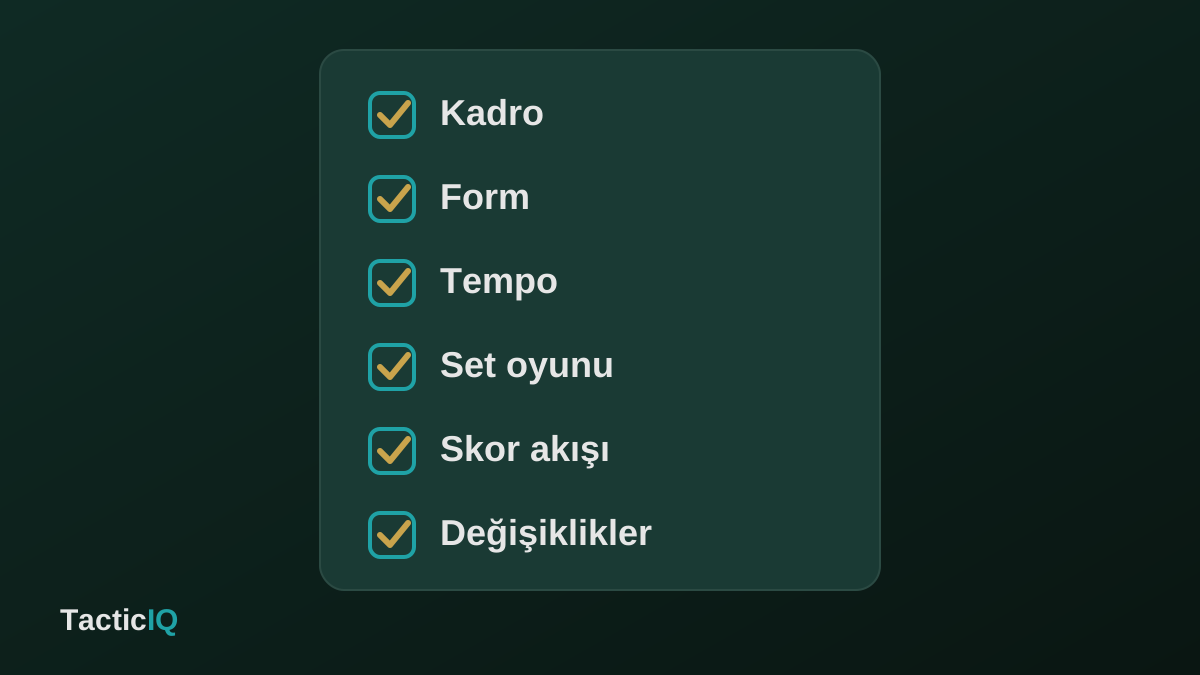
- Identify the block height in the first five minutes. Where does the defensive line stand?
- Watch the transition reaction at the first loss of possession. Who goes out quickly, and who drops back?
- Note repeated patterns. Is danger coming from the same wing three times? Is the same centre-back making the same mistake?
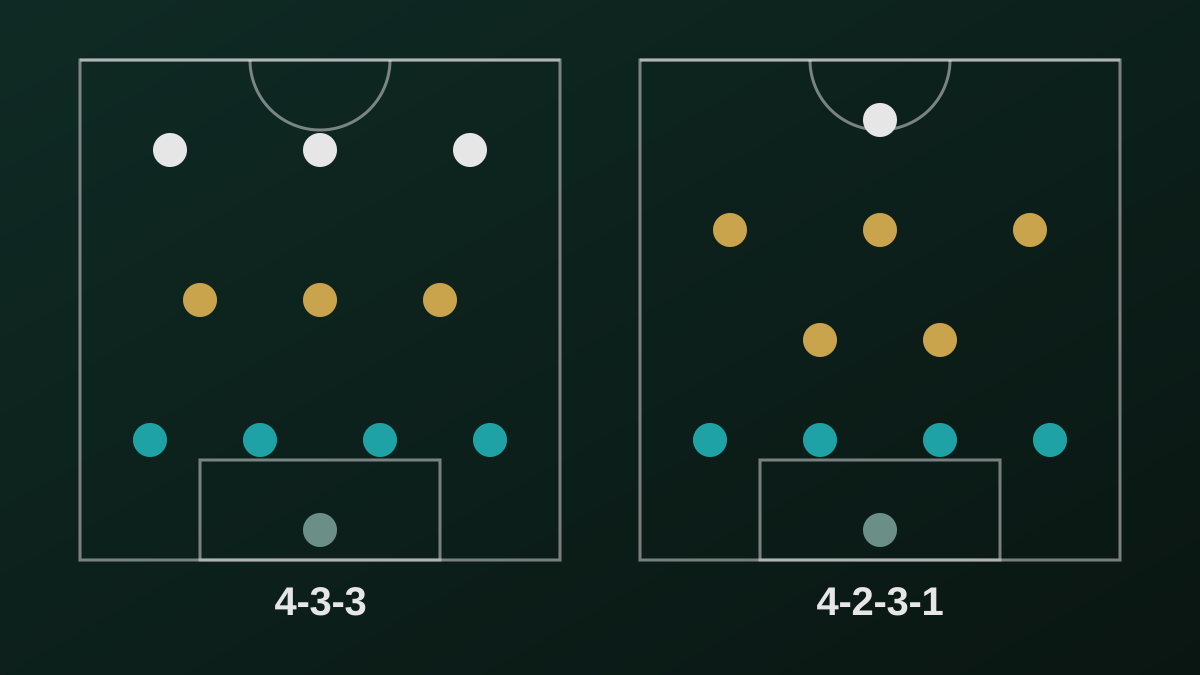
These three steps are enough. You don't have to understand everything; a few clear observations improve your predictions and squad decisions. For the relationship between the first XI, formation and block, see our formation guide.
A tip for beginners
If these concepts are new to you, focus on one team over the weekend. For two or three matches, watch only that team's block height, press triggers and transition reactions. When reading becomes automatic, move on to other teams. Getting to know one team in depth teaches you faster than trying to watch every team at once. For a wider match-reading framework, see our Football IQ guide.
Conclusion
Pressing, block and transition are the alphabet of tactics. Block height shows where a team starts defending, press triggers show how the pressure is organized, and transition reveals a team's character. Instead of memorizing terms, try to see them on the pitch; the three-step watching method is enough for this. The ability to read tactics quietly raises the quality of your predictions and squad decisions.