How football intelligence (Football IQ) develops
· 7 min read
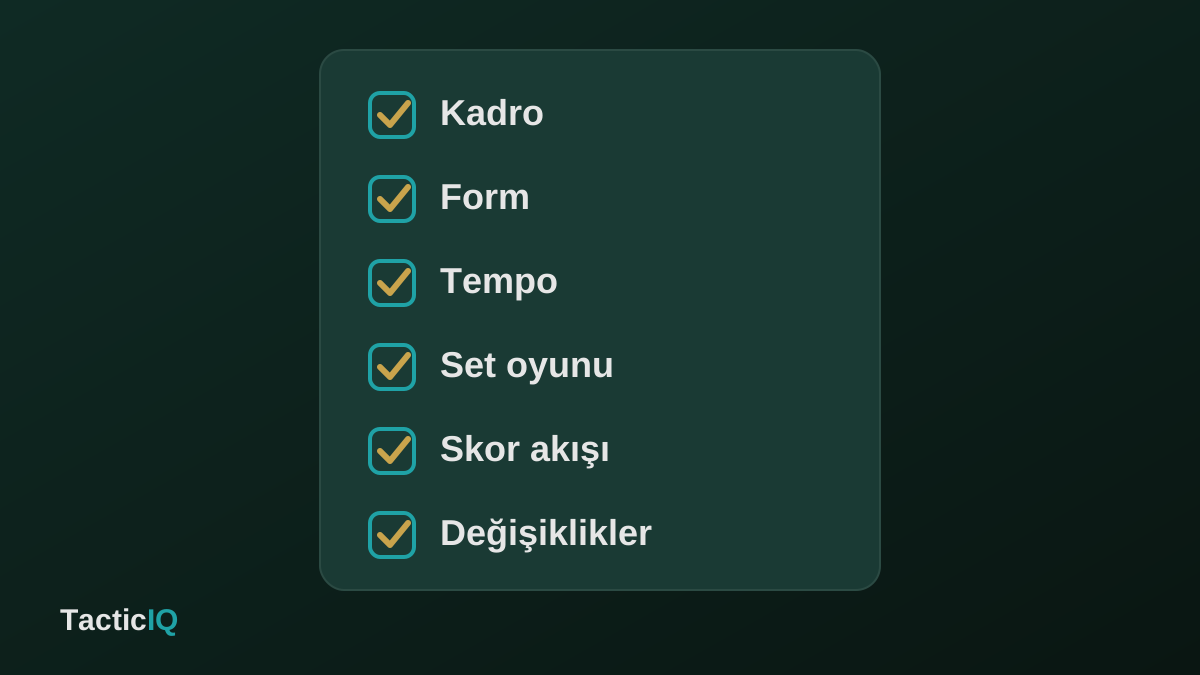
"Football intelligence" describes two different things. The first is the decision-making skill of players on the pitch: when to turn with the ball, when to make space, when to commit a foul. The second is the skill of us viewers in reading a match: why one team is better, why a particular move was made, whether this score is lasting.
This article is about the second. The good news: the ability to read a match is not a natural talent but a skill fed by habits. The bad news: there is no shortcut to it. But with small, regular habits you can make a clear difference.
1. Look beyond the score
The score is the summary of a match, but not its story. Over two halves, one team may have kept the ball in the opponent's half while the other went ahead with a single fast attack. The score can be the same, but the game is very different.
The first data to look at alongside the score:
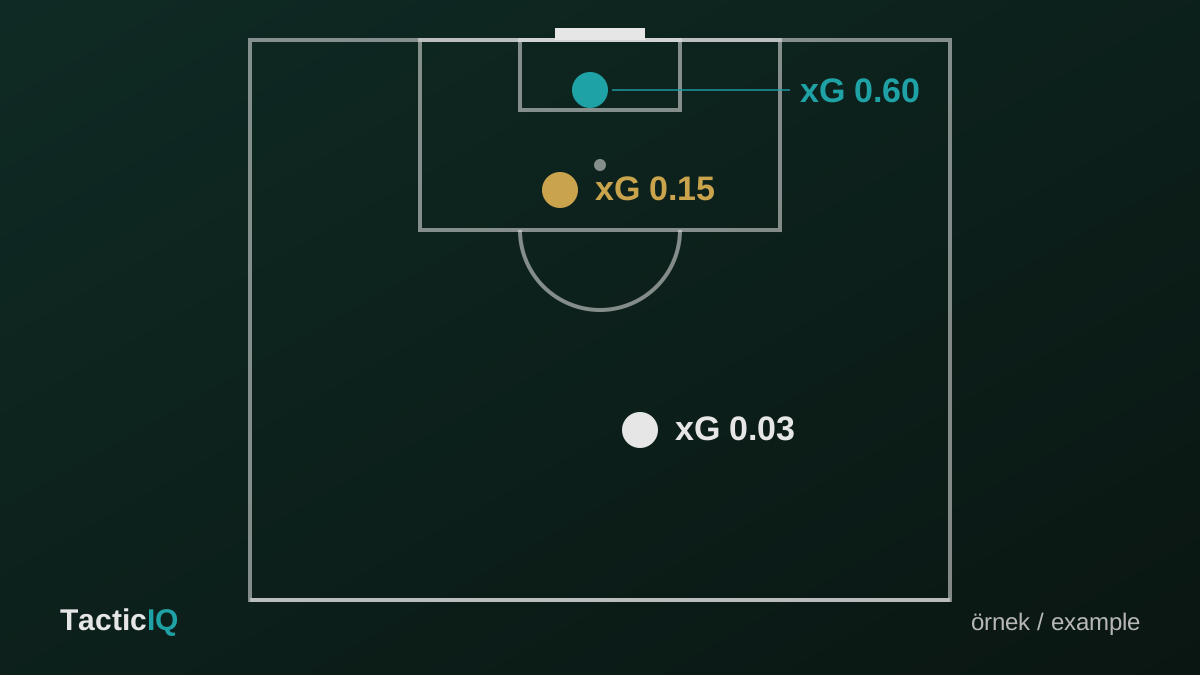
- Shot quality: Rather than the number of shots, look at where the shots were taken from. We explained this in detail in our xG guide.
- Possession: High ball possession does not always mean dominance; but a team that wins with low possession may be following a deliberate plan.
- Corners and set pieces: Some teams win their matches from set pieces; this may be a tendency.
- The minute of the score: A goal in the first minute and a goal in the 85th minute change the flow of a match very differently.
None of these data tells the truth alone; they give insight when read together.
2. Pre-match preparation: squad, absences, schedule
Reading a match in advance is harder than reading it afterwards, and more instructive. Look at three things:
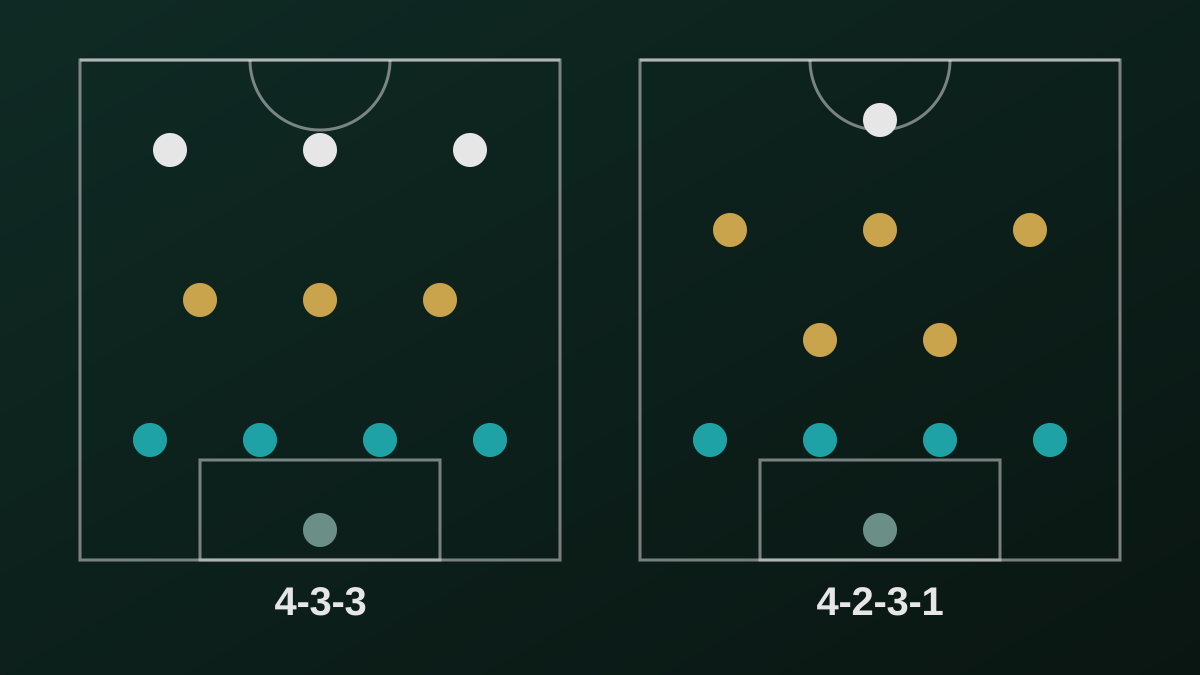
- Probable squad and formation: Try to understand the head coach's preference from recent matches. Our formation reading guide helps here.
- Injured and suspended players: The absence of a key defender can affect the whole defensive structure. Who replaces a player in his absence may be more decisive than the player himself.
- Fixture congestion: A team that played an extra-time match three days earlier naturally lowers its tempo. So rotation expectations matter.
TacticIQ gathers the points table, squad, injured and suspended players, and fixtures for a team on one page. It is ideal for a ten-minute review before a match.
3. Ask six questions while watching
Make it a habit to ask yourself these six questions while watching:
- How are the teams defending? High press, mid block or low block? Where do they win the ball?
- What happens when the ball is lost? Do they press immediately, or do they drop back and take up position?
- How are the wings used? How high do the full-backs push? Do they leave space behind them?
- What do they do on set pieces? Is it man-marking or zonal?
- What are the substitutions aiming at? Fresh legs, a tactical change, or protecting the score?
- How did the game change when the score changed? Did the side ahead retreat, or did the side behind take risks?
You don't need to analyze the entire match from start to finish to find the answers to these questions. Focus on only one or two questions per match. Over time, you will start tracking several questions at once.
4. Small examples reveal big patterns
Recognizing some patterns significantly speeds up your reading:
- Early goal: A team that concedes early usually has to change its plan. The rest of the match is read in light of that change.
- Winger and full-back mismatch: If a winger does not help defensively, the workload on the full-back and the midfield grows.
- The last 15 minutes: If the score difference is small, attacking substitutions and long balls increase. If it is large, the tempo drops.
- Penalty and goalkeeper: In moments that change the direction of the match, the goalkeeper's role is bigger than the statistics table reflects.
These are not rules, but patterns that develop intuition; there are many exceptions.
5. Keep a prediction log
One of the most effective ways to develop football intelligence is to record your predictions and then compare them with the result. Your memory plays tricks on you: it says "I already knew that." A written record is merciless but honest.
A simple method:
- Before the match, write your prediction and its reasoning in one sentence. ("The home side is weak in defence due to injuries this week, 2-1.")
- When the match ends, write the real result and why it turned out the same or different.
- At the end of the month, see which of your reasons were consistent and which were misleading.
TacticIQ makes this easier: your predictions are recorded, and when the match ends, the Points Breakdown shows each item separately. Streak bonuses and badges reward consistency; accurate analysis across many matches stands out, not a single lucky week. For how the game works in general, see our no-betting prediction game article.
6. Learn to watch by rating players
Rating players and the head coach at the end of a match makes you watch the match twice as attentively. In TacticIQ, once the match ends, you rate players from the Rating tab. There are nine categories for outfield players (shooting, passing, dribbling, defending, duels, discipline, tactics, mentality and fitness) and nine separate categories for goalkeepers. For the head coach there are seven categories: result management, first-XI decisions, substitutions, in-match reaction, discipline, post-match management and press relations.
These categories move you from a general impression of "played well" to clearer assessments such as "passing accuracy was good, but defensive contribution was weak." Your ratings are shown side by side with the community average, so you can see where your eye differs from others'. Rating while the performance is fresh, right after the final whistle, gives more accurate results.
7. Account for the referee and the match environment too
Things that affect a match are not only the teams. TacticIQ's match information shows the referee information supplied by the data provider and the referee record: average yellow cards, red cards and penalties per match for the matches the referee has managed, with the number of matches the data is based on. If the sample is small, interpret these numbers with caution. Weather and pitch information also help you understand the match environment.
An important warning: referee averages alone do not determine a match's result. Think of them as signals that help anticipate events such as the number of cards and penalties.
8. Test your own thinking against the community
On prediction and squad pages, community statistics show what percentage of users chose a particular formation or player. You can use this in two ways:
- Comparing after the fact: After you have made your own decision, compare it with the community. Do you mostly think the same, or do you diverge?
- Going against the majority: If you have a strong reason, going against the majority is also a skill. What matters is not following the herd, but taking a reasoned position.
A note here: once you have seen community data or the official lineup, you cannot change your related predictions for that match; independent predictors earn an extra bonus. So the app prefers that you think for yourself first.
9. Avoid overconfidence
The most dangerous trap in football intelligence is feeling invincible after a few correct predictions. Football is a low-scoring game; a single long-range shot, a single goalkeeper error or a single disputed refereeing decision can upset the entire analysis. A good viewer accepts this uncertainty and thinks of predictions as probabilities: "Most likely this, but another outcome is possible."
10. A small weekly routine
Developing intelligence does not require great effort, just regular small effort:
- Start of the week: Look over the weekend matches and pick one or two.
- Before the match: Squad, absences, form (10 minutes).
- During the match: Focus on two questions.
- After the match: Rate, look at the Points Breakdown, and write a one-sentence note.
- End of the month: Review your mistakes.
Conclusion
Football intelligence is not about knowing a lot of data; it is about learning to ask the right questions. Look beyond the score, prepare before the match, record your predictions, and evaluate players and the head coach in detail. Within a few weeks, you will notice that you watch matches differently and speak more clearly in arguments.