El Clásico guide: how to read Real Madrid vs Barcelona
· 5 min read

Two great cities of Spain, two great clubs: Real Madrid from Madrid and Barcelona from Catalonia. El Clásico, meaning "the classic" in Spanish, is one of the most-watched club matches in the world. The match is described not only as a contest for points, but as a show in which cities, identities and styles of play face each other.
This guide turns El Clásico into a reading exercise. What matters here is not who is playing, but how the match is played and what you can look for as a viewer. Because squads, head coaches and formations change, there are lasting questions for reading this match well.
Note: TacticIQ is an independent app; it has no connection with the clubs, leagues or federations, and it is not supported, endorsed or approved by them. Club names are used only to identify the match in question.
Two styles of play: is it always like this?
When El Clásico is described, two opposing philosophies are often cited: one emphasizes possession and patient build-up by dividing the pitch into zones, the other emphasizes fast transitions into the spaces the opponent leaves behind. This contrast was true for years and still works as a reading framework. But a warning: every head coach has a different hand, and the clubs' styles change over time. Instead of reaching a memorized verdict before the match ("these two teams play like this"), look at how they played in the last few matches.
Three criteria help to identify the style while watching:
- What happens when they lose the ball? Do they press immediately, or do they retreat into a block?
- Attacking speed: Does the attack develop through passing, or is it direct and fast?
- Gaps between the lines: Is the distance between the defence and midfield short or wide?
These three questions tell you much more than the formation on paper.
How to read the formation
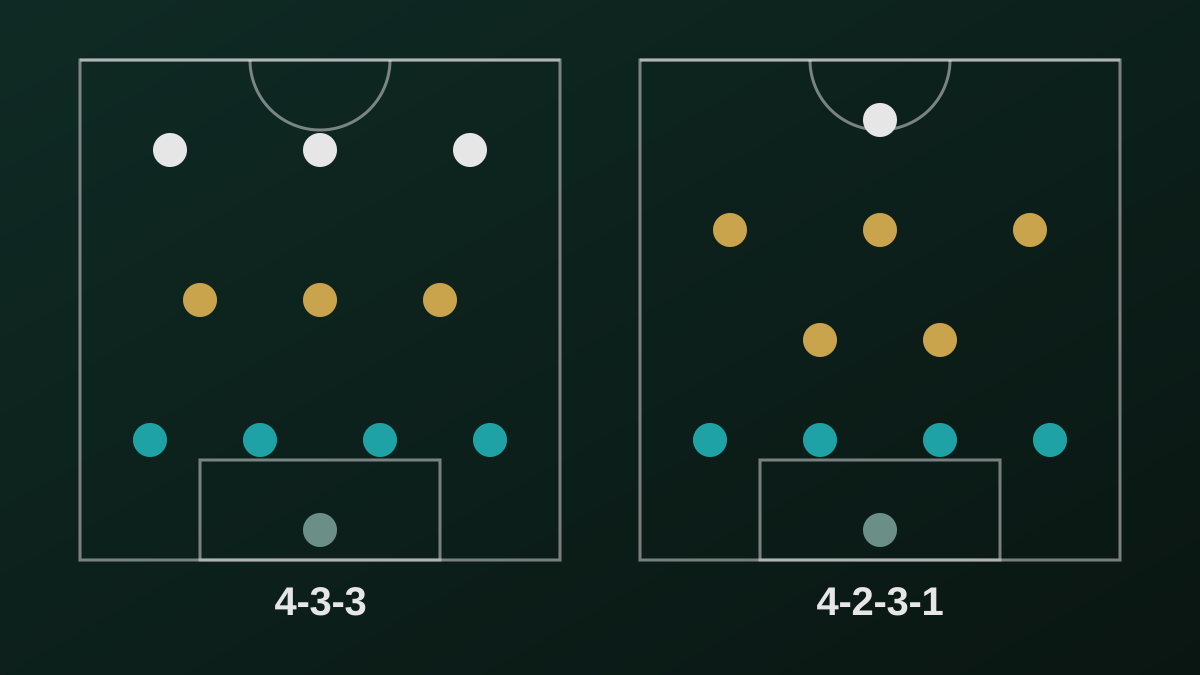
When you get the squad sheet for El Clásico, at first glance you may see 4-3-3, 4-2-3-1, 4-4-2 or another shape. But the same numbers hide different roles. Look at these details:
- Do the full-backs push forward? If they do, the space left behind is an invitation for a fast counter-attack.
- Is there a holding midfielder? If a single deep player is left alone, that zone becomes fragile under pressure.
- Is there a number ten or a false nine? A player moving between the lines disrupts the position of the opposing defence.
We explained the general logic of formations in our formation reading guide.
The first half hour of the match
In big matches, the first 30 minutes are usually a "test of strength." Teams probe the opponent's pressing triggers and escape routes. Watch for these signs:
- Does one team keep exiting through the same wing? This shows that they have spotted a weakness on that side.
- Is the defensive line high or low? A high line leaves space behind; a low line gives the opponent the ball.
- How are the set-piece routines? In big matches, corners often decide the score.
Score, xG and real control
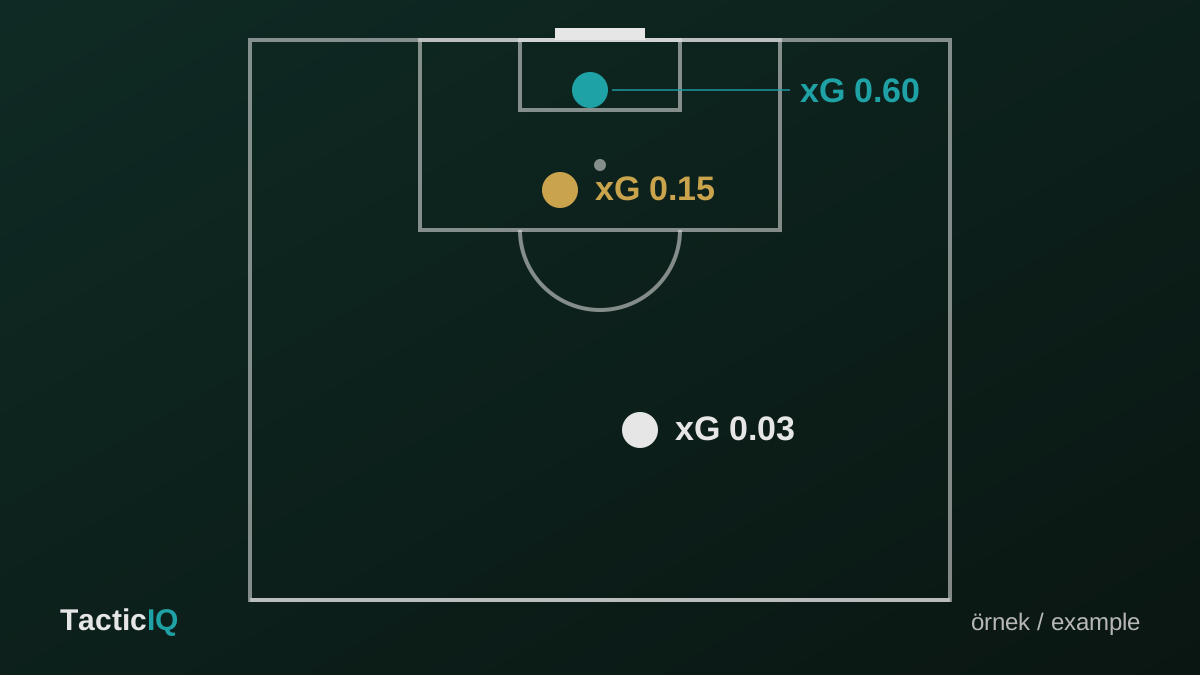
In big matches like El Clásico, a single individual moment of brilliance can decide the score. That's why, in addition to the final score, look at shot quality. As we explained in our xG guide, the total expected goals show which team created better chances. Matches where the score and xG diverge suggest that the story of the game was different. In TacticIQ, the match's Statistics tab shows data such as xG, shots and possession, if the data provider sends them. If the provider does not send team statistics for a match, the app states this clearly.
Recurring in-match patterns in El Clásico
- Retreat after an early goal: The side ahead builds a block and the side behind keeps the ball. In this case the score and possession can point in opposite directions; this is normal.
- Time for substitutions: In big matches, head coaches usually make changes between the 60th and 75th minutes. Which position receives a fresh player shows the plan.
- Cards and discipline: Managing critical players who have a yellow card affects the second half.
- The last 15 minutes: If the score is level, attacks become crowded and long balls and set pieces increase.
What you can do with TacticIQ in Clásico week
A simple routine for Clásico week:
- Follow both teams. Add both teams in Discover so the match comes up in your feed.
- Turn on alerts. Turn on the match alert for the lineup announced, match started and match ended notifications. For notification settings, see our smart match notifications article. Remember the time difference too: match times vary by country, and the notification makes this easier.
- Build your own XI. Before the official lineup, choose the formation and players on the Lineup tab. A prediction made before the official lineup earns a time bonus; once you see the official formation, your lineup and prediction for that match are locked.
- Make your score and event predictions. Submit them before the match starts.
- Score at the end of the match. Rate players and the head coach by category and compare with the community average.
The prediction game does not involve real money; points are virtual. If you are curious about how it works, see our no-betting prediction game guide.
Reasoning exercise: justify your prediction
Before El Clásico, try writing these three sentences:
- "In this match ... will use the ball more, because ..."
- "The turning point of the match will be ..., because ..."
- "The score will end ..., so ..."
Go back to these sentences when the match ends. Which reasoning was correct? Which was wrong and why? After a few Clásicos, you will see how your view has sharpened.
Conclusion
The most important thing in El Clásico is being able to look beyond famous names to the structure of the game. A viewer who can read the style, formation, tempo, set pieces and shot quality will sense the flow of the match and perhaps its result in advance. Try the questions in this guide at the next Clásico; you will feel that you are part of the match.