Fenerbahçe vs Galatasaray derby guide: how to read it
· 6 min read
Two great clubs on the two sides of Istanbul: Fenerbahçe on the Asian side in Kadıköy, and Galatasaray on the European side. The name Intercontinental Derby for the match between them comes from this geography. Played nearly every season of the league, this match carries a meaning far beyond the points table. Derby week changes the mood of the city; it becomes the only topic of conversation at workplaces, coffee houses and family tables.
This guide is not about club history or squad names, but about how to read the derby. A derby speaks a different language from an ordinary league match, and a viewer who knows this language both enjoys the match more and predicts more accurately.
Note: TacticIQ is an independent app; it has no connection with the clubs, the league or the federation, and it is not supported, endorsed or approved by them. Club names are used only to identify the match in question.
Why is a derby played differently?
In derbies, the points table, form and recent results sometimes become useless. There are three reasons:
- Psychological weight: For players, a single match can become a memory of a whole season. This pressure unlocks some players and locks up others.
- Tempo and contact: The first half hour usually passes in a contested, combative way. Play often stops; the number of cards and fouls rises.
- Appetite for risk: Losing carries more of a sense of "shame" than simply a defeat, so head coaches often act cautiously. That is why low-scoring derbies are more common than expected, but a single mistake can change the score in an instant.
These are not strict rules; a derby can end 5-4. But behind the sentence "a derby is a separate match" there is a real pattern.
What to look for in the first 15 minutes
The first minutes of a derby set the tone for the remaining 75. Pay attention to:
- Pressing height: Do the teams meet the opponent in their own half, or in midfield? A team trying to build from the back may make its first mistake early in a high press.
- How high do the full-backs push? If they start cautiously, the full-backs stay back, which reduces the influence of the wings.
- Who wants the ball in midfield? In a derby, the players who ask for the ball define the leader of the match.
- Long-ball rate: If long balls are frequent in the early minutes, the team is reducing risk.
Discipline and cards
Card numbers rise in derbies, so referee and discipline information becomes important. In TacticIQ's match information, the referee information supplied by the data provider and the referee record are shown: average yellow cards, red cards and penalties per match for the matches the referee has managed, presented together with the number of matches the data is based on. If the sample is small, interpret these figures with caution. If referee information has not been published yet, the app clearly shows "No referee information yet."
While reading card tendencies, consider this question as well: if there is a key player on a yellow card, will the head coach keep him on or substitute him? This decision affects the plan for the second half.
Squads: surprises in derbies
Surprises are more likely in derby squads, because head coaches adjust to the opponent. When predicting the squad, look at:
- Injured and suspended players: The absence of a key player directly affects the formation. The injured/suspended list on the team page is the first thing to check.
- Fixture congestion: If there is a European match before the derby, the expectation of rotation increases.
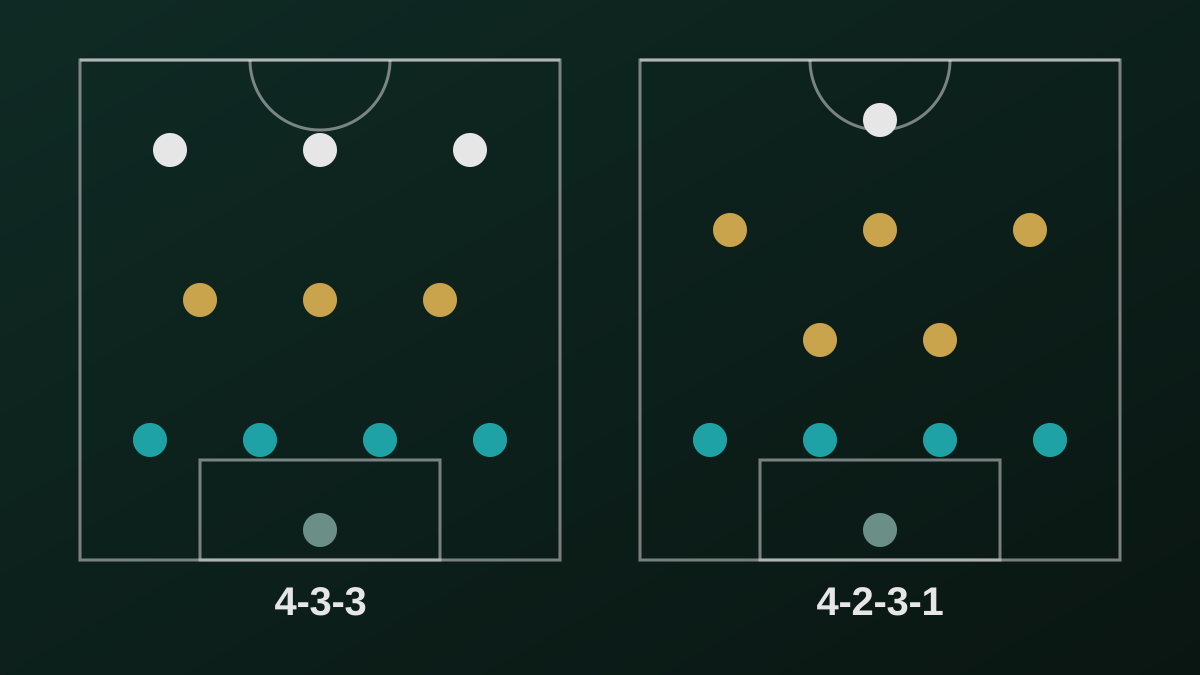
- The formation in recent matches: Will the head coach enter the derby with the same formation, or make an adjustment to match the opponent?
For how to read formations, you can look at our 4-3-3 and 4-2-3-1 guide.
Set pieces
In derbies that are closed, the match is usually decided by set pieces or a single individual mistake. A corner or free kick becomes decisive even in a match with few chances. While watching, look at this: is the defence zonal or man-to-man? Is the corner played short, or sent to the far post? These details give hints about where the goal will come from.
What you can do with TacticIQ on derby day
- Add the rival to your favorite teams. When choosing your favorite teams in your profile, it is recommended to add both your own club and its main rivals; that way, derbies and important matches come up in the feed on their own. The small badges and stars on a match card give hints about form, importance or derby signals; they are signals, not guarantees of the result.
- Turn on a match alert. Turn on the match alert to receive a notification when the lineup is announced and when the match starts. For how to set up notifications, see our smart match notifications article.
- Build your own XI. Before the official lineup is announced, choose the formation and players on the Lineup tab. A prediction made before the official lineup earns a time bonus; if you see the official formation, your prediction and lineup for that match are locked.
- Make event predictions. Submit your score, total goals, card and corner choices before the match starts.
- Follow the match live. Follow the event flow on the Live tab, shots and possession on the Statistics tab, and xG if the data provider sends it.
- Rate players at the end. You determine the Man of the Derby; your ratings are shown side by side with the community average.
The prediction game does not involve real money; points are virtual. For the logic of the game, you can look at our no-betting prediction game guide.
Common mistakes in predicting derbies
- Attributing too much meaning to past derbies. Last season's derby may be very different with this season's squad and formation.
- Emotional predictions. An optimistic prediction in favor of your own team misleads statistically more often. Try to predict as if you were carrying out a neutral analysis.
- Committing to a single score. Low scores such as 1-1 or 0-0 can be common in derbies; but instead of committing to one score, thinking about a range of total goals is a more solid approach.
- Judging the match by the first goal. After the first goal in a derby, teams change character; watch the quality of the positions separately.
How to evaluate after the derby
When the match ends, look at these in addition to the score:
- Do the number of shots and shot quality (xG) match up?
- Did a red card or an early injury disrupt the flow of the match?
- Did the head coach's substitutions affect the score?
The answers to these questions will help you predict the next derby better.
Conclusion
The Fenerbahçe vs Galatasaray derby is more than a football match, so the way to read it is also different. Pay attention to tempo, discipline, squad surprises and set pieces; make your prediction with your reasoning, not your feelings. On derby day, what should excite you is not only the ball on the screen, but also the feeling that you can read the match.