Community average and the prediction lock explained
· 6 min read
In prediction games, the most tempting and the most dangerous thing is seeing what others think. Tempting, because the crowd's average is often a good signal. Dangerous, because once you see it, your own thinking is silently erased and there is no "own prediction" left. TacticIQ resolves this tension with a rule: if you see community data or the real lineup, your predictions for that match are permanently locked. In this article we explain the logic of the rule and how you can benefit from the community average.
What is the lock rule?
The app's prediction rules, in brief:
- Before the match starts, you can edit your prediction as much as you like.
- If you see community data or the real lineup, your predictions for that match are permanently locked; they cannot be deleted or changed.
- Once the match has started, no prediction changes can be made.
The rule looks simple, but the idea behind it is strong: a prediction is valuable if it was made before you saw other people's opinions. If you could see the crowd and then change your prediction, everyone would converge on the same average, and the game would turn into a "follow the majority" contest. The lock both protects your own reading and keeps the ranking fair.
The app warns you before you take an action that would lock. The logic "focus, formation, squad and predictions are permanently locked; at least one prediction is required" is also explained within the tour. So accidental locking is hard; but if you want to lock deliberately, know why.
What does the community average show?
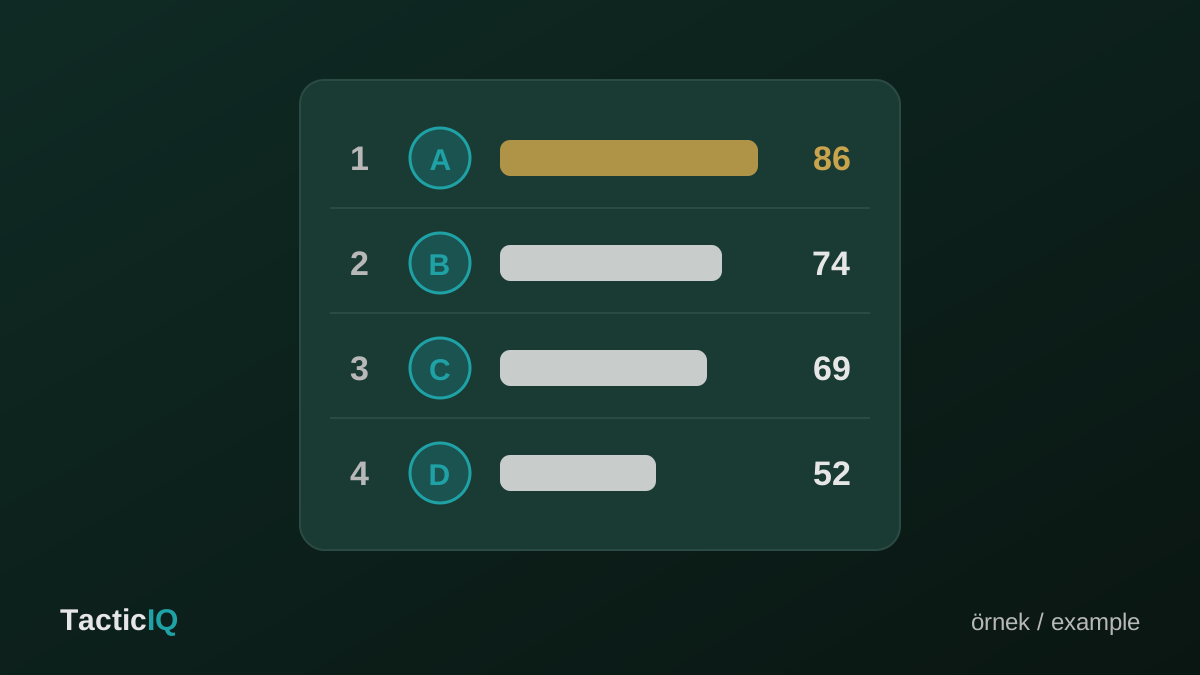
The community average summarizes the tendency of the anonymous crowd in a given category: how many people chose which score, how many goals, which formation. It is not an instruction; it is a snapshot. Where it is useful:
- A warning when you are overly confident: If you chose a score that very few people picked, it gives you a chance to question your reasoning again. This does not mean "you are wrong"; it means "is your reasoning solid?"
- An opportunity the crowd overlooks: If the majority has piled onto one side and you are thinking differently for a reasoned cause, that difference may be your advantage. But this alone is not enough.
- Learning after the match: Comparing the community tendency with your own predictions after the match shows where you diverge from the crowd.
Do not read the crowd as a "correct answer." Thousands of people can make the same mistake; football included. Take the average as a clue.
The right order: you first, then the crowd
Our suggested order for using the lock rule deliberately:
1. Write your own reading
Study the match and enter your predictions: the starting XI, score, total goals and, if needed, cards and corners. Think first. That way your prediction history truly belongs to you.
2. Write your reasoning in one sentence
"This team loses because its full-backs push so high" — even a single sentence is enough. A short reason lets you understand, when you see the crowd, why your view changed.
3. Decide before locking
If you want to see the crowd, know that it will lock your predictions. If you are not sure of your predictions and still want to change them, postpone looking at the crowd. You have the right to freely edit before the match starts.
4. Compare after the match
When the match ends, examine the difference between the community tendency and your own prediction. In which cases did diverging from the crowd help, and in which did it hurt?
When is it reasonable to diverge from the crowd?
Being different is not always a strategy in itself. Diverging from the crowd can be defended in these situations:
- If injury or suspension news arrived late: The majority may have predicted with outdated information. But verify it from a source you trust.
- If you noticed a tactical detail: For example, if one team's defensive line is very high and the opponent has a fast forward.
- If the match's importance is not in the majority's calculation: A team may be playing a match where it rotates.
Otherwise, "being different just to be different" lowers prediction quality. Have a reason for diverging.
Another way to benefit from the crowd: chat
The views of the community show up not only as an average, but also in the match chat. There, reading other people's reasons is more instructive than seeing the average, because it gives the "why" answer. We explained how the chat rooms are organized in our match chat guide. However, learning a friend's prediction in the chat also has an effect; so before locking your own prediction, it is cleaner to stay away from others' reasons and keep your reading untouched.
Locking in friends' contests
If you are organizing a prediction contest with friends, the lock rule works like a "referee." Nobody can later say "I was actually going to pick this." This keeps the contest fair and its enjoyment intact. For practical tips on friends' contests, see our friends' prediction contest article.
Common mistakes
- Looking at the crowd first and then making your "own" prediction: This spoils your own reading.
- Treating the majority as automatically correct: An average is information, not a prophecy.
- Making the lock a complaint after the fact: The rule is open from the start; reading the warnings is enough.
- Looking at the crowd in every match: If it becomes a habit, your own analytical muscle weakens.
Why is the lock a protection, not a penalty?
At first glance the lock may seem restrictive: "why can't I change my mind?" But from the point of view of the game's fairness, the lock is a protective shield. If everyone could see the crowd and adjust their predictions accordingly, the ranking would have no meaning; the ones who decide latest, not the ones who read best, would rise to the top. Thanks to the lock, the value of a prediction stays tied to the information you had when you made it. That makes your place in the ranking truly yours.
In practice this has two consequences. First, you should develop the habit of a final review before locking: injury and suspension information, weather, rotation, everything should be clear at that moment. Second, if you regret something after locking, record it as a lesson: "I should have thought about this before looking at the crowd." These notes gradually build your own prediction discipline.
Conclusion
The community average is a powerful helper, but only after you have formed your own view. The lock rule exists to keep this order. Write your own reading first, note your reasoning, then look at the crowd if needed. After the match, examine the difference between the two records; the real place to learn is there.